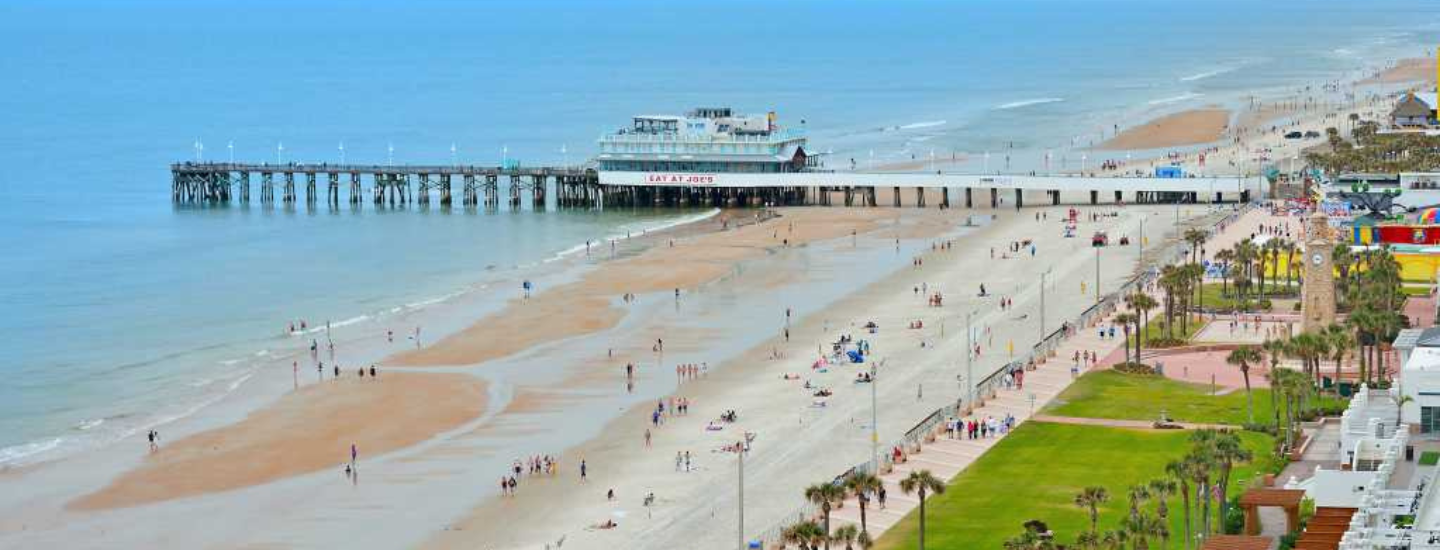
Daytona Beach
Daytona Beach used TikTok Search Ads to reach high-intent travelers, improve conversion efficiency, and strengthen peak-season tourism performance.

Search campaign terms
Core terms tied to Daytona Beach’s summer tourism campaign and how search ads were used to reach travelers with intent.
- TikTok Search Ads: Search ads used to reach high-intent travelers searching for travel-related information.
- Broad match + automatic keyword features: A strategy covering branded and non-branded keywords to capture diverse tourist search intents.
- CPA: Cost per acquisition; search ad CPA fell to $0.52, or 39% of non-search ads.
- CPC: Cost per click; the case study reports 66% lower CPC.
The objective
Target high-intent tourists and improve conversion efficiency during the peak season
Daytona Beach, a premier coastal destination in Florida renowned for family vacations and group travel, relies heavily on hotel partnerships for customer acquisition. The brand leverages TikTok Search Ads to precisely target high-intent users actively searching for travel-related information. Its main goals were to boost hotel booking conversions during the summer tourist season, optimize marketing budget efficiency, and expand the reach of its search ads.
The solution
Broad-match and automatic keywords strategy
Daytona Beach implemented a targeted TikTok Search Ads campaign using a "broad match + automatic keyword features" strategy to cover both branded and non-branded keywords, comprehensively capturing diverse tourist search intents. From April to May 2025, the destination added two specialized ad groups. These new ad groups, combined with existing ones, formed a matrix covering the entire user journey, significantly boosting the penetration rate of its search ads.
The results
Efficient breakthrough in summer tourism marketing
Daytona Beach's TikTok Search Ads outperformed expectations significantly, emerging as a key driver of summer tourism growth. By precisely targeting keywords and optimizing ad groups, the search ad CPA dropped to just $0.52—representing only 39% of the CPA for non-search ads. Customer acquisition costs were reduced by over 60%. Meanwhile, the share of search ads in TikTok's total expenditure rose from 10% to 12%, with the budget nearly fully utilized over the past two months.
This campaign not only established a new channel for converting high-intent tourists but also validated TikTok Search Ads' core value in tourism destination marketing, laying an efficient strategic foundation for future peak-season initiatives.
Tips & takeaways
Lean into intent. Targeting high-intent search queries helps capture travelers already looking for options, improving conversion quality.
Use broad match + automatic keywords. This combo expands reach by covering both branded and non-branded traveler searches.
Build a full-journey ad group structure. Multiple ad groups mapped to the user journey increase penetration and drive more efficient CPAs.
Your questions, answered
Business Help CenterHow did Daytona Beach target high-intent travelers?
It used a Search Ads Campaign with a broad-match and automatic keywords strategy. That approach covered both branded and non-branded keywords to capture a wider range of travel-related search intent.
What campaign structure helped improve efficiency?
From April to May 2025, Daytona Beach added two specialized ad groups. Together with existing ad groups, they created a full-user-journey structure that increased search ad penetration and supported more efficient cost per acquisition.
What results did the search ads deliver?
The campaign reported 66% lower cost per click and 61% lower cost per acquisition. Search ad CPA fell to $0.52, or 39% of the CPA for non-search ads, while search ads’ share of total spend rose from 10% to 12%.