Your customer saw it on TikTok. Your dashboard didn’t.
By Natalie Rois DACH Independent Agencies Lead

Measurement blind spots on TikTok
Last-click dashboards can miss TikTok's role in longer, cross-device buying journeys, which may lead agencies to underinvest in demand creation; the key takeaway is to look beyond simplified reporting when evaluating TikTok's impact.
- 79% of purchases driven by TikTok are not captured by common attribution methods for web advertisers.
- Click attribution undervalues TikTok's conversions by 73% and return on ad spend by more than 50%.
- TikTok users are 30% more likely to convert and spend 20% more once they do.
A customer discovers your product online. They think about it for days, read more, search for it, compare options and - finally - buy through your website. While the journey, or the decision to buy, might start on TikTok, your dashboard may record the eventual conversion as coming from somewhere else.
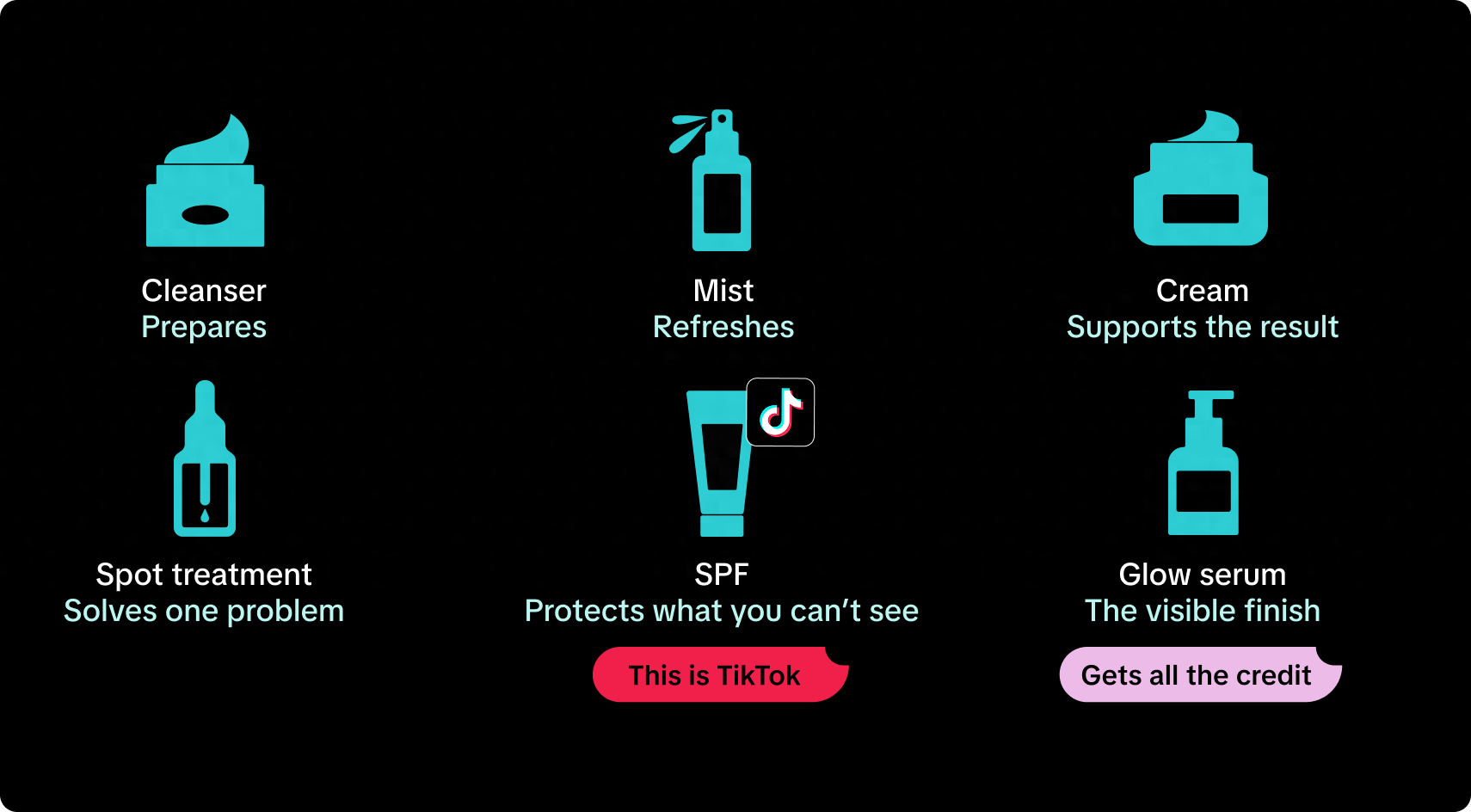
It's a bit like (stay with me here) crediting the glow serum for great skin, while ignoring the SPF that protected it.
So, the question is, is your current measurement set up to track the actual impact of TikTok?
Why your dashboard might be missing the real journey
Customers don't move through the world the way the spreadsheet imagines they do. Real purchasing decisions rarely follow the straightforward progression that traditional marketing models assume.
In truth, the journey loops. People see something, save it, search for it later, compare options, return to it, and eventually convert; often across days, devices, and platforms.
What the dashboard assumes

What actually happens
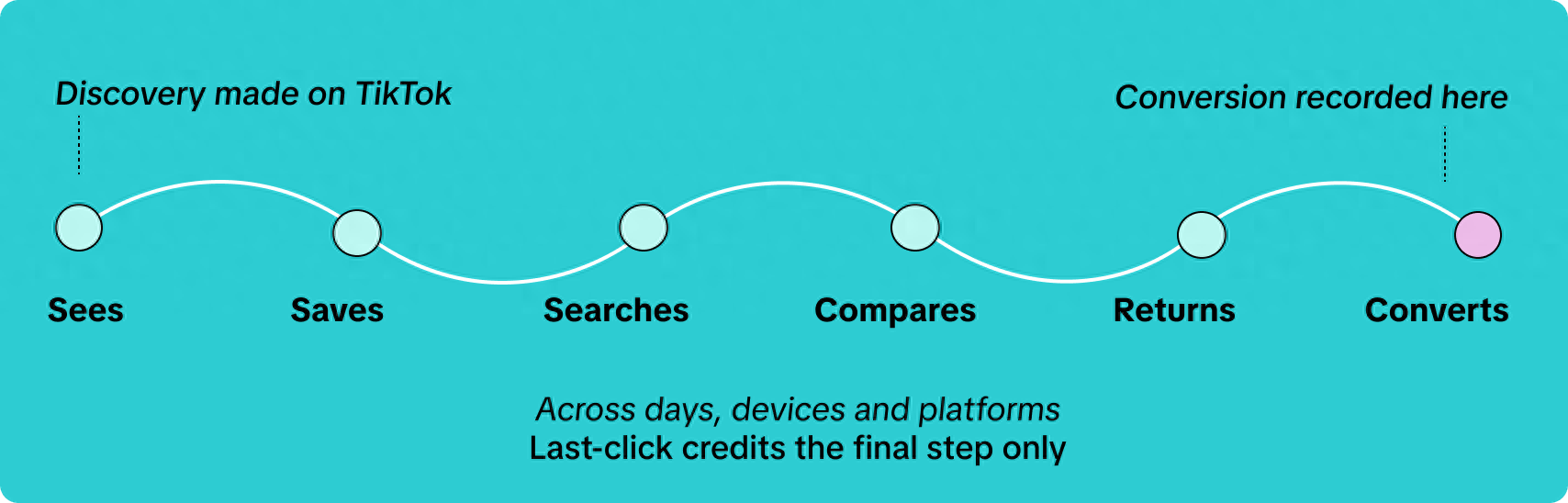
For many consumers, TikTok can play an important role in shaping the decision to buy. Final conversion comes later once any doubts have been resolved and reassurance has been found.
This is a media combination that requires a number of different parts to work effectively. As mentioned before, we can compare to a skincare routine. Each product plays a different role, even though the glow serum may get most of the visible credit. Measurement creates a blind spot when it recognises only the final step and overlook severything that helped move the customer towards it.
Dashboards relying heavily on last-click attribution can miss the bigger picture: the model gives most, or all, of the credit to the final measurable interaction.
It was never designed to follow a customer across the loop we just described. Which is exactly why 79% of purchases driven by TikTok are not captured through common attribution methods for web advertisers¹ - not because TikTok isn't driving the decision, but because the tools measuring it were built for a world that no longer exists.
And the gap doesn't stop at purchases. The same undercounting compounds across the entire funnel:
79% of purchases driven by TikTok are never attributed to TikTok at all
73% of click attribution undervalues TikTok's conversions
50%+ of click attribution undervalues TikTok's ROI
The value was there all along, measurement just hasn't caught up to it.¹
Want to gain more insights and advantage for your agency and your clients?
Simplified measurement may satisfy short-term reporting, but it can create long-term blind spots
Short-termist measurement that ignores the bigger picture may be tempting when you need something out the door today, but the cost shows up in the next quarter and the ones following.
When we fail to measure the full spectrum of what contributes to a conversion, budget drifts toward channels that capture demand and away from channels that create it. Over time, this can weaken demand generation and make conversion campaigns less effective. Part of the reason: pixel attribution alone understates TikTok's ROI by more than 50%.²
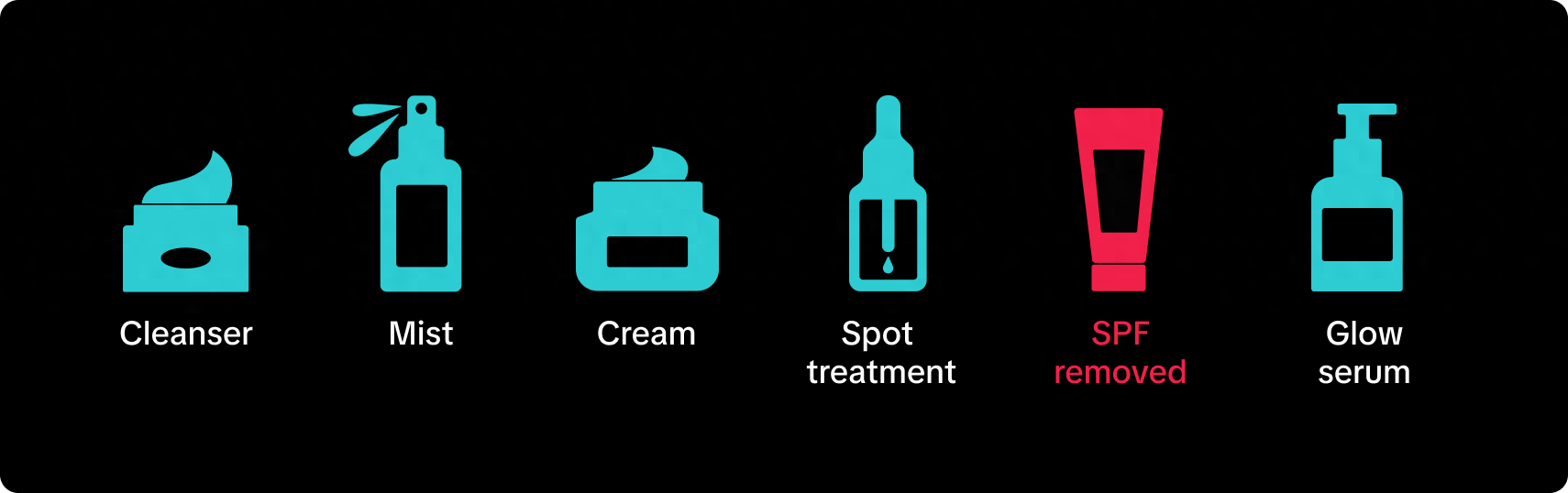
Drop the SPF from the routine and nothing changes overnight. The budget felt tight anyway, so maybe you drop another step too. Still nothing obvious. But give it time, and the routine simply stops working as well because every product left behind is now doing more than it was ever designed to.
And it's not just conversions that go missing, it's the customers too. TikTok users are 30% more likely to convert, and once they do, they spend 20% more than customers acquired elsewhere³. Underinvest in the channel, and you're not quietly losing a bit of efficiency — you're also potentially losing your customers to a competitor who's already measuring more effectively.
30% more likely to convert from free to paying
20% more spend once they do
Want to learn more about measurement on TikTok?
A TikTok representative can help learn more about measurement that works for your agency and your clients.

Underinvest in the channel, and you're not quietly losing a bit of efficiency — you're also potentially losing your customers to a competitor who's already measuring more effectively.
TikTok for Business, "Beyond the Click," 2024; TikTok Marketing Science MMM Meta- Analysis with Monks, 2023.
TikTok x Monks, 2023 so the channel that's actually creating demand looks, on paper, like it's barely working
TikTok x Deloitte, "Short-Form Content, Long-Term Impact," 2025
Your questions, answered
Business Help CenterWhy can last-click reporting miss TikTok’s impact?
Customers often discover a product, save it, search later, compare options, and buy days later across devices and platforms. Last-click attribution mainly credits the final measurable interaction, so earlier influence from TikTok can be missed.
What blind spots can simplified measurement create?
When reporting focuses only on the final step, budget can drift toward channels that capture existing demand and away from channels that help create it. Over time, that can weaken demand generation and make conversion campaigns less effective.
What should agencies do next?
Agencies that want to learn more about measurement for their clients can connect with a TikTok Ads representative through the contact options on the page, or visit the Business Help Center for support.